KOCH
KOCH
KOCH
Systems, Subsystems, Frameworks
Field + Form + Fit/Fight
Field + Form + Fit/Fight
Helping designers with easy, efficient and effective
Product discovery.
Helping designers with easy, efficient and effective
Product discovery.
Helping designers with easy, efficient and effective
Product discovery.
Strategy and Toolkit
Self-Initiated Project
Jan 2023 - Ongoing...
Beyond processes, definitions, tables
Beyond processes, definitions, tables
Are the existing tools helping a designer look through all factors before considering the ones that are important? Are client discovery calls always fruitful and productive? Are those stakeholder questionnaires and templates really helpful? Let’s try to dig deeper.
Are the existing tools helping a designer look through all factors before considering the ones that are important? Are client discovery calls always fruitful and productive? Are those stakeholder questionnaires and templates really helpful? Let’s try to dig deeper.
Are the existing tools helping a designer look through all factors before considering the ones that are important? Are client discovery calls always fruitful and productive? Are those stakeholder questionnaires and templates really helpful? Let’s try to dig deeper.
Presenting
Presenting
Koch
Koch
Koch
Every Maker’s
Starter Tool kit
Every Maker’s
Starter Tool kit
Every Maker’s
Starter Tool kit
What is Koch?
What is Koch?
Everything you need for Quick and Effective Product Discovery
Everything you need for Quick and Effective Product Discovery
Everything you need for Quick and Effective Product Discovery
What does it include?
What does it include?
-Maker’s Learning cycles
-Maker’s Learning cycles
-Maker’s Learning cycles
Frameworks and System Modelling techniques to understand Product Systems
Frameworks and System Modelling techniques to understand Product Systems
-Maker’s Discovery Deck
-Maker’s Discovery Deck
-Maker’s Discovery Deck
Product discovery deck for co-creation
Product discovery deck for co-creation
-Client Onboarding Deck
-Client Onboarding Deck
-Client Onboarding Deck
Helping designers to educate client about importance of design process
Helping designers to educate client about importance of design process
- Research&strategy tools
- Research&strategy tools
- Research&strategy tools
50+ research&strategy tools and frameworks to choose from and customise
for product discovery and delivery
50+ research&strategy tools and frameworks to choose from and customise
for product discovery and delivery
-Learning Kit
-Learning Kit
-Learning Kit
Detailed explanations with examples and tool tips on how to use effectively
(Impact(why), How (useful) and examples are included)
Detailed explanations with examples and tool tips on how to use effectively
(Impact(why), How (useful) and examples are included)
Finding mini invisible feet.
Finding mini invisible feet.
Finding mini invisible feet.
What all should a designer ideally know and know what they don’t know before starting a project?
What all should a designer ideally know and know what they don’t know before starting a project?
What all should a designer ideally know and know what they don’t know before starting a project?
-As a designer, what should I understand about a Product, its systems and services surrounding it?
- How can we get everyone on the project inline with the goals of the project ?
-Are the existing tools helping a designer look through all factors before considering the ones that are important?
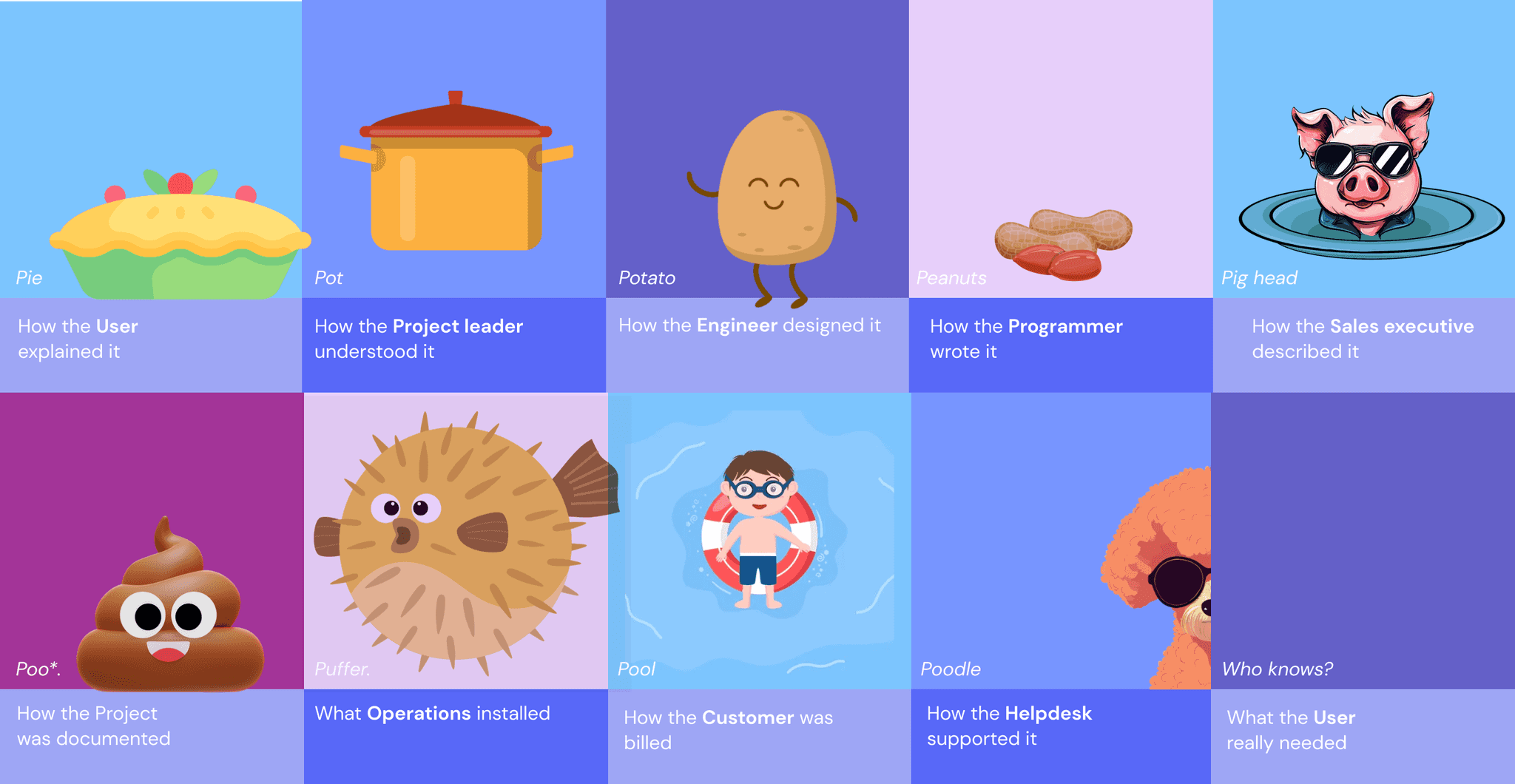
A common ground
A common ground
A common ground
Individuals and Interactions over processes and tools
Individuals and Interactions over processes and tools
Individuals and Interactions over processes and tools
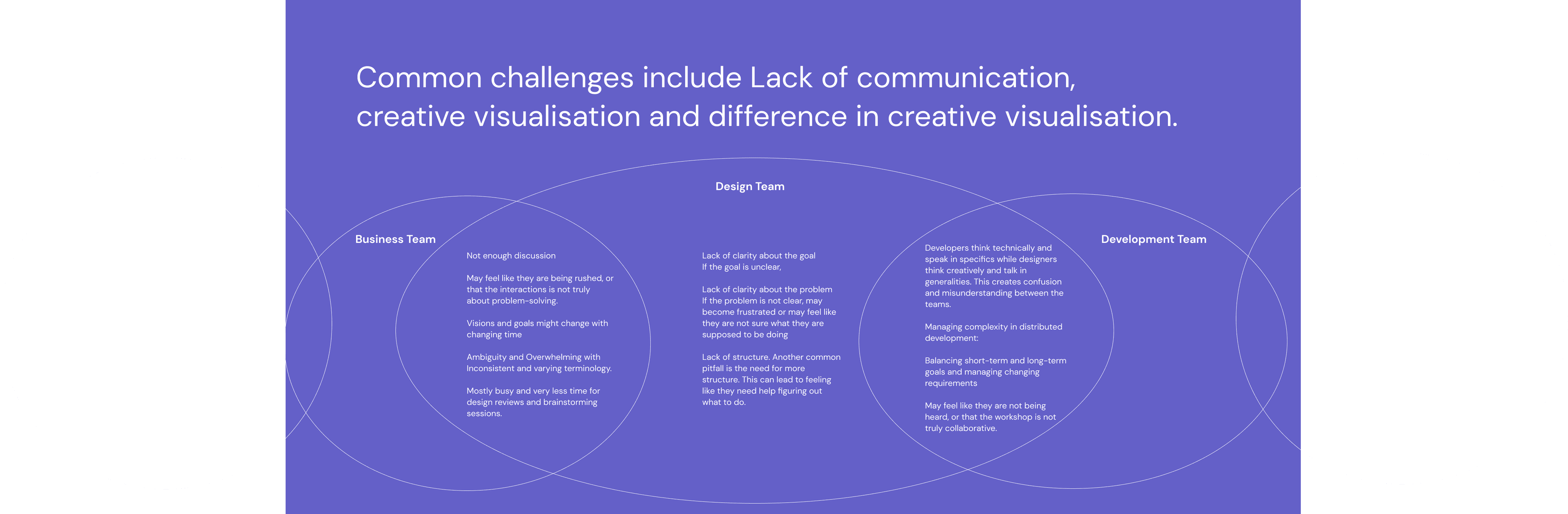
Of the most common pitfalls of problem-discovery workshops, lack of communication, lack of creative visualisation, difference in creative visualisation, lack of structure, not enough time to brainstorm and document, over-reliance on the facilitator are some of the major challenges. This can lead to several problems, and the finally the doom of a product.
Of the most common pitfalls of problem-discovery workshops, lack of communication, lack of creative visualisation, difference in creative visualisation, lack of structure, not enough time to brainstorm and document, over-reliance on the facilitator are some of the major challenges. This can lead to several problems, and the finally the doom of a product.
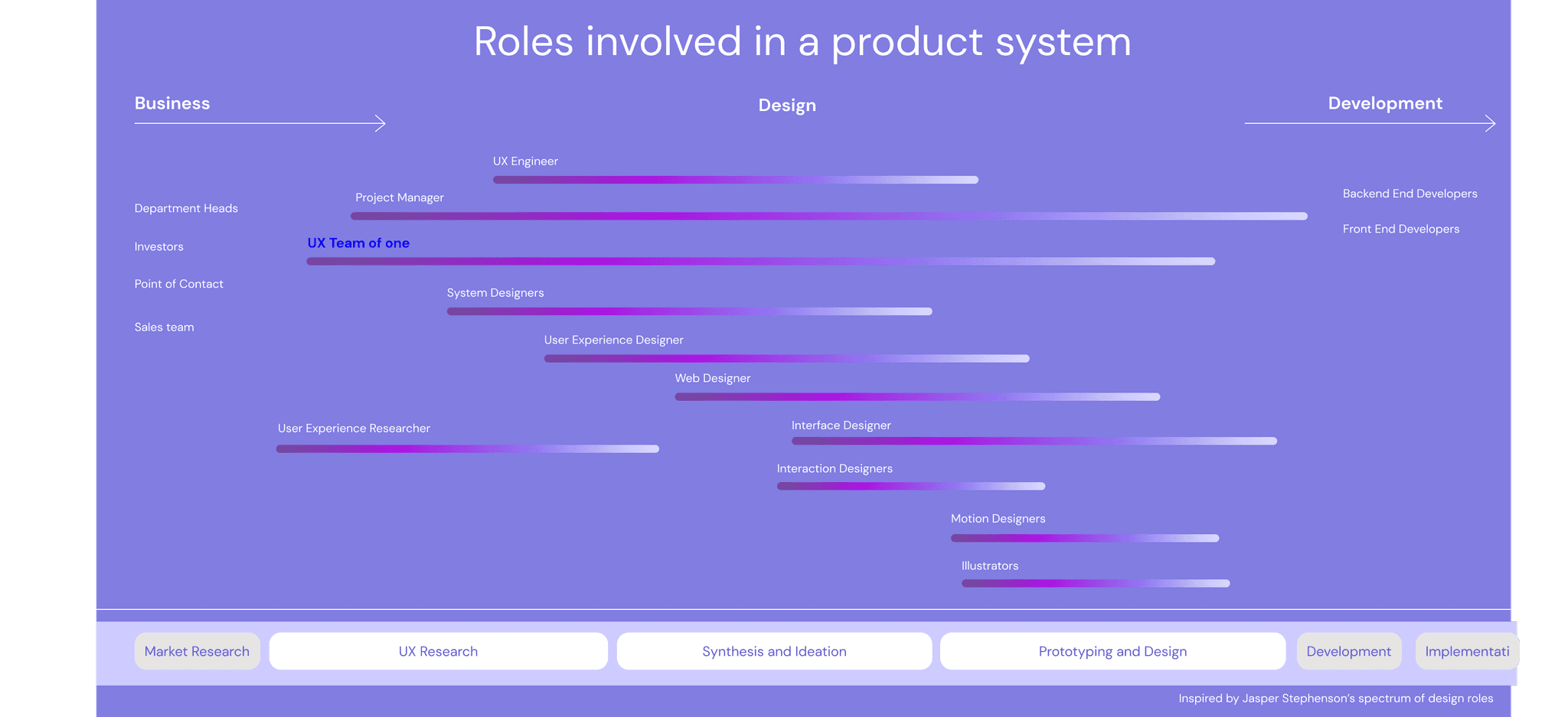
Discovery
Discovery
Discovery
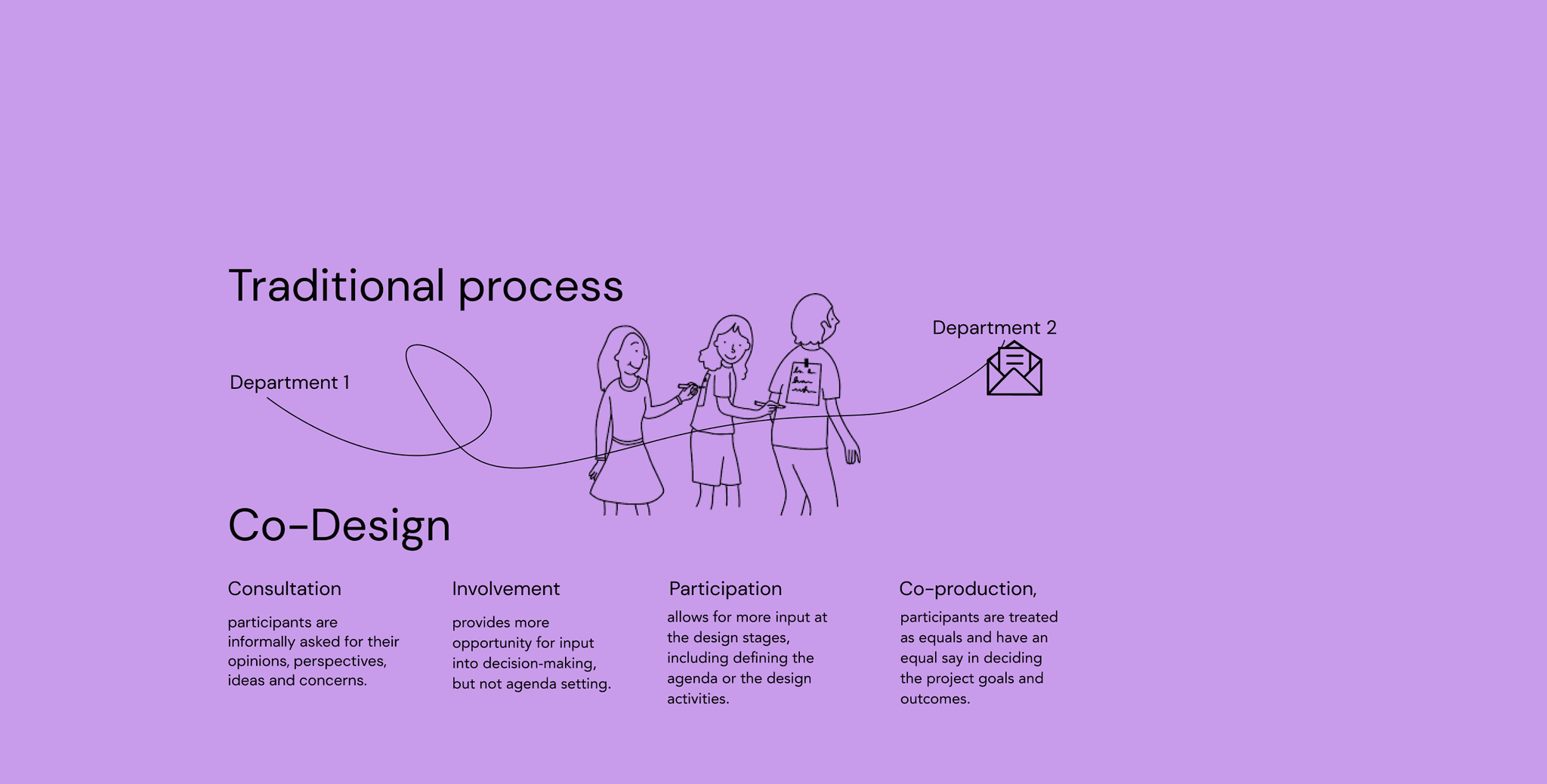
The act of making, as pointed out by John Heskett,29 is fundamental to being human. When making things for oneself or hand-crafting things for a familiar user there no need for user research. Making things for markets gave rise to professional design, and the increase in choice and complexity gave rise to user-research. New flexible platforms may reconnect users to making. Of course, design goes beyond making tangible things creating yields communications, environments, services, systems, organisations and other elements in people’s lives for which we need to introduce systems thinking to our processes.
The act of making, as pointed out by John Heskett,29 is fundamental to being human. When making things for oneself or hand-crafting things for a familiar user there no need for user research. Making things for markets gave rise to professional design, and the increase in choice and complexity gave rise to user-research. New flexible platforms may reconnect users to making. Of course, design goes beyond making tangible things creating yields communications, environments, services, systems, organisations and other elements in people’s lives for which we need to introduce systems thinking to our processes.
Holistic and Coherent
Holistic and Coherent
Holistic and Coherent
What do we need to know and know what we don’t
What do we need to know and know what we don’t
What do we need to know and know what we don’t
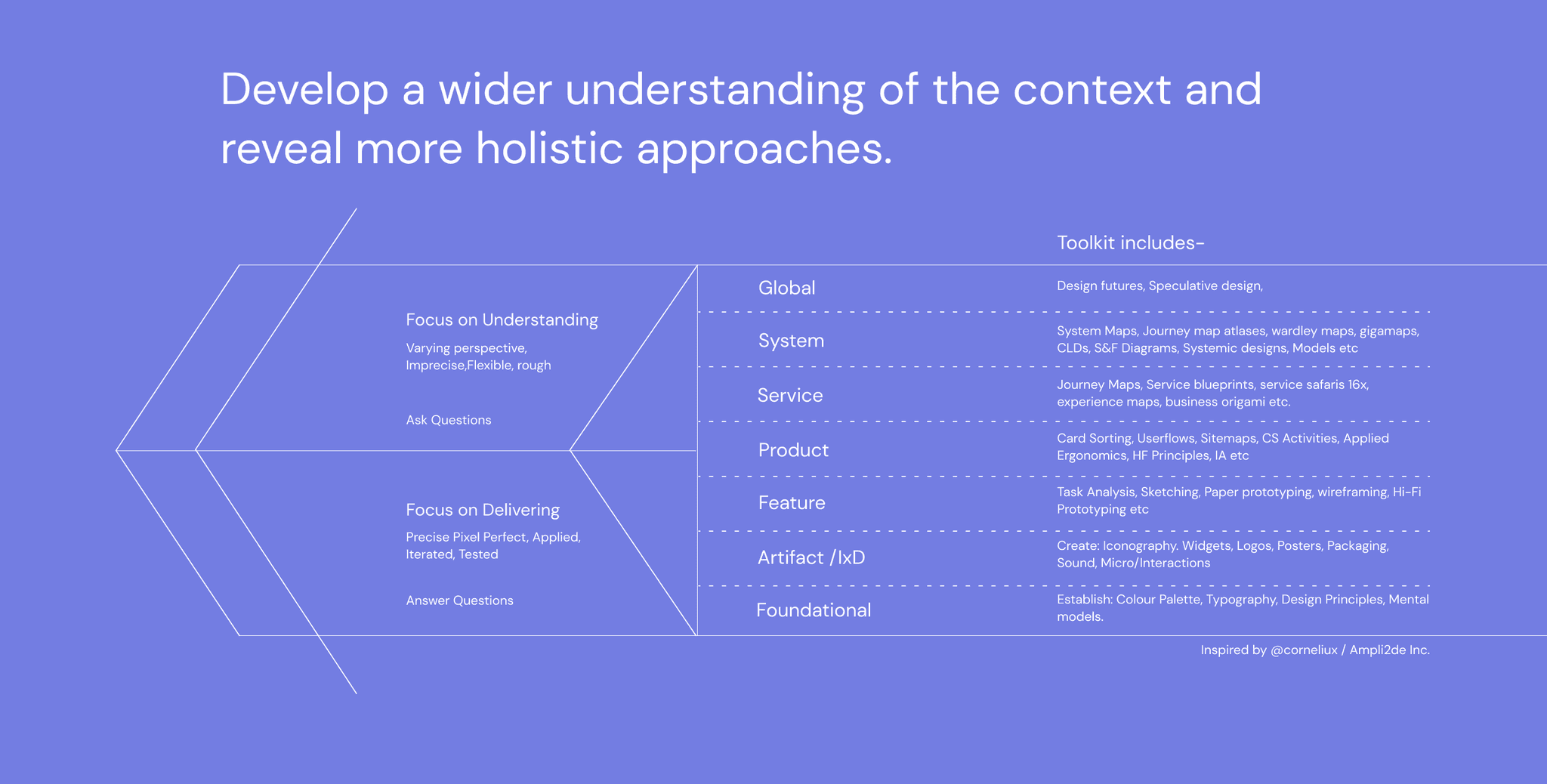
The toolkit brings a broader range of possibilities to the surface by helping teams answer one strategic question: “What do we need to know to make change?”
Once teams have an initial idea of the main purpose for making a change, they begin by selecting any of the frameworks, roughly sketching answers to its related questions, and then identifying key methods that can help them create relevant content.
Having a set of general questions that can be used for any type of project and a structure for answering them is helpful for teams to break their domain-specific approaches to problem framing and solution finding.
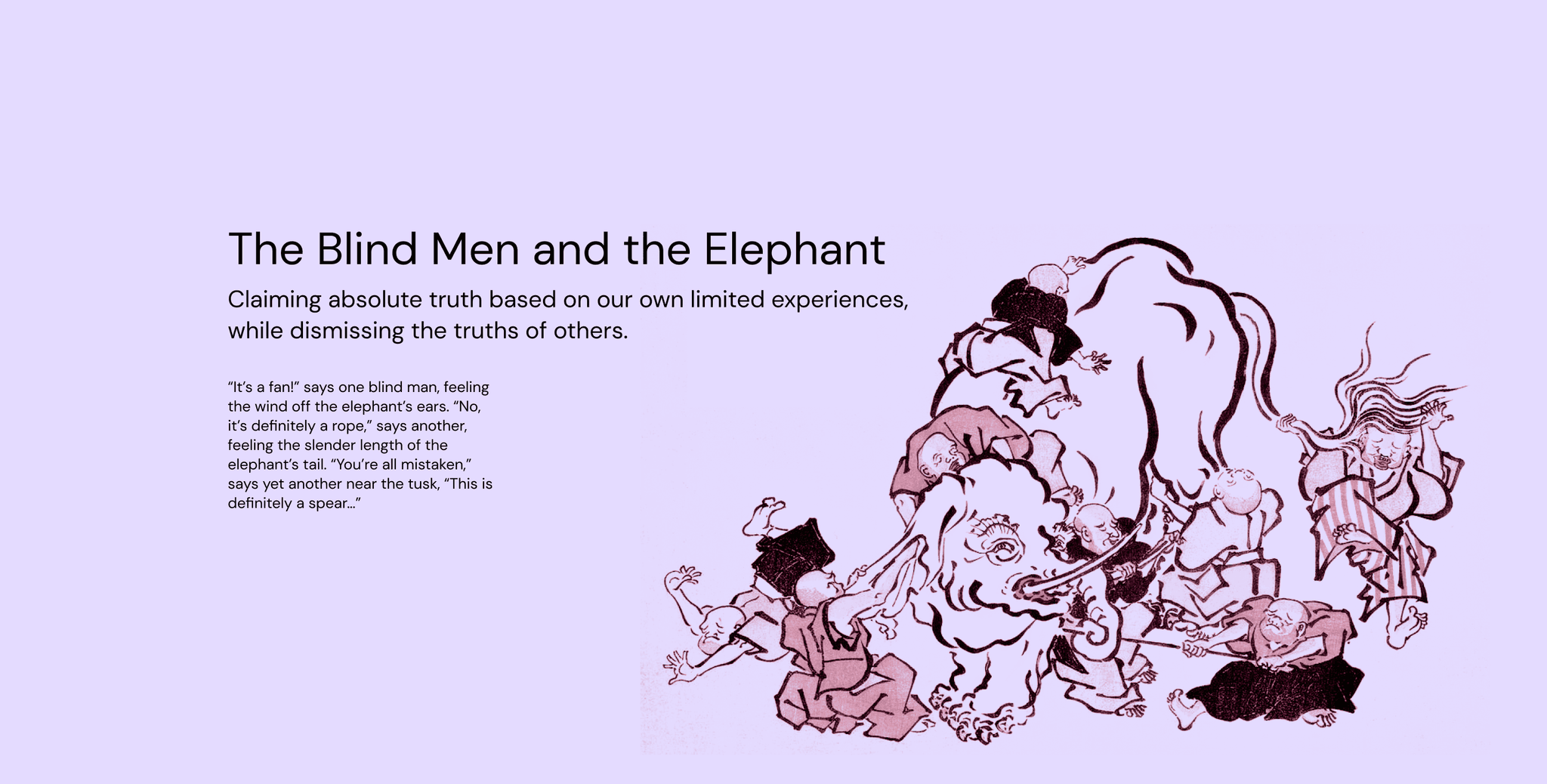
The solution was not to construct a convincing argument for one outcome or another, but rather to create a way for various individuals and organisations to come up with their own arguments within a holistic, coherent structure.
The toolkit brings a broader range of possibilities to the surface by helping teams answer one strategic question: “What do we need to know to make change?”
Once teams have an initial idea of the main purpose for making a change, they begin by selecting any of the frameworks, roughly sketching answers to its related questions, and then identifying key methods that can help them create relevant content.
Having a set of general questions that can be used for any type of project and a structure for answering them is helpful for teams to break their domain-specific approaches to problem framing and solution finding.
The solution was not to construct a convincing argument for one outcome or another, but rather to create a way for various individuals and organisations to come up with their own arguments within a holistic, coherent structure.
The Concept
The Concept
The Concept
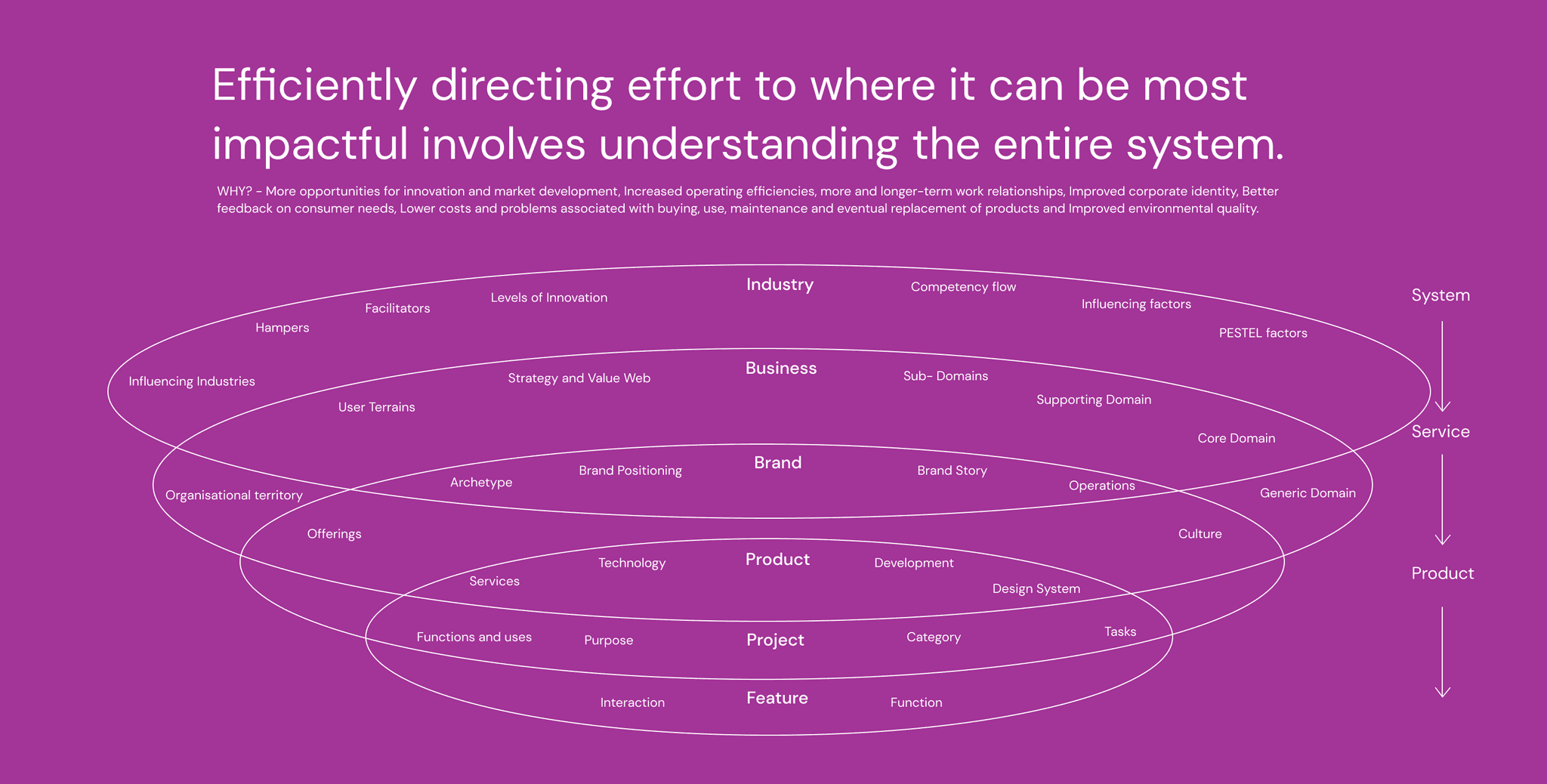
Asking questions and creating models of the system around the product in early planning phases and throughout complex projects can help teams develop a wider understanding of the context and reveal more holistic alter- native futures.Incorporate considerations of user aspirations, strategy, and operations into the design of new offerings.
Asking questions and creating models of the system around the product in early planning phases and throughout complex projects can help teams develop a wider understanding of the context and reveal more holistic alter- native futures.Incorporate considerations of user aspirations, strategy, and operations into the design of new offerings.
Expanding Perceptions
Expanding Perceptions
Expanding Perceptions
If all you have is a hammer, everything looks like a nail
If all you have is a hammer, everything looks like a nail
If all you have is a hammer, everything looks like a nail
When the process is generalised and definitively structured we cannot innovate. We have to find a way to exploring and developing effective action in complex contexts, enabling systems change and find deep rooted problems. We need to be understanding how things influence one another as part of a whole. Demand a deeper understanding of the linkages, relationships, interactions, and behaviours among the elements that characterise the entire system.
When the process is generalised and definitively structured we cannot innovate. We have to find a way to exploring and developing effective action in complex contexts, enabling systems change and find deep rooted problems. We need to be understanding how things influence one another as part of a whole. Demand a deeper understanding of the linkages, relationships, interactions, and behaviours among the elements that characterise the entire system.

Collaborate and Customise
Collaborate and Customise
Collaborate and Customise
Systems thinking
and Atomic Design
Systems thinking
and Atomic Design
Systems thinking
and Atomic Design
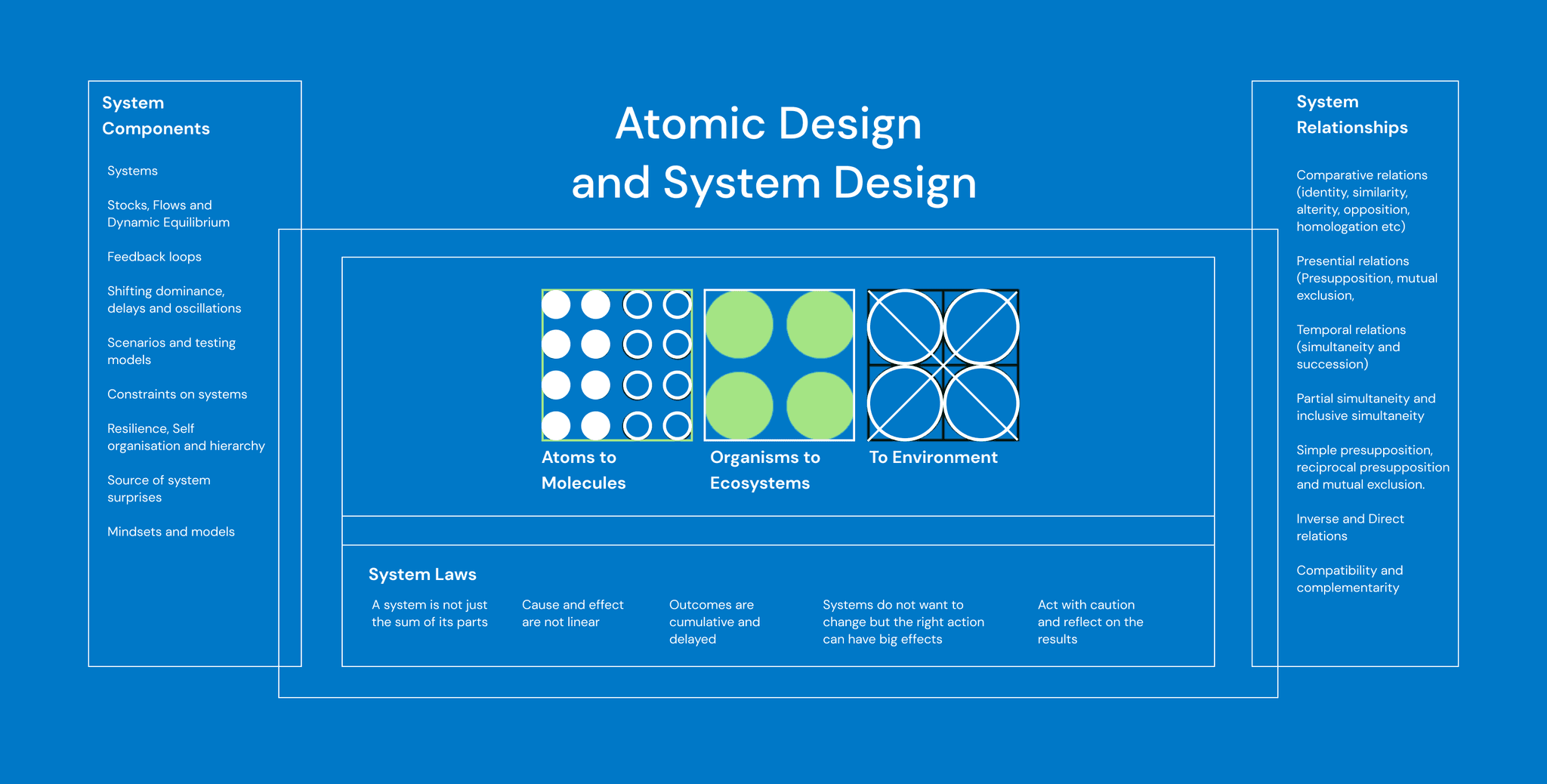
Incorporating a systems thinking approach into your world view can have beneficial implications on all the ecological, social and business systems within which you interact. Systems cannot be designed. At least not in the classic sense of the word we use at every other level below it. You can intervene in, influence, analyze, visualize or map systems, but generally they are too big to be ‘designed’ by a single entity, let alone a single individual. How do you ‘design’ societal systems like poverty? Or justice? Or finance? Or ecology?
They are mostly used to sketch operations, value creation, and other factors that need to fit each other in order for the project to ascertain the best path towards purposeful, lasting change. The structure facilitates information flow from framework to frame- work, supporting deeper investigation of each individual framework and wider exploration of the relationships between them.
Incorporating a systems thinking approach into your world view can have beneficial implications on all the ecological, social and business systems within which you interact. Systems cannot be designed. At least not in the classic sense of the word we use at every other level below it. You can intervene in, influence, analyze, visualize or map systems, but generally they are too big to be ‘designed’ by a single entity, let alone a single individual. How do you ‘design’ societal systems like poverty? Or justice? Or finance? Or ecology?
They are mostly used to sketch operations, value creation, and other factors that need to fit each other in order for the project to ascertain the best path towards purposeful, lasting change. The structure facilitates information flow from framework to frame- work, supporting deeper investigation of each individual framework and wider exploration of the relationships between them.
Collaborate and Customise
Collaborate and Customise
Collaborate and Customise
Understanding Systems,
Creating Models
Understanding Systems,
Creating Models
Understanding Systems,
Creating Models
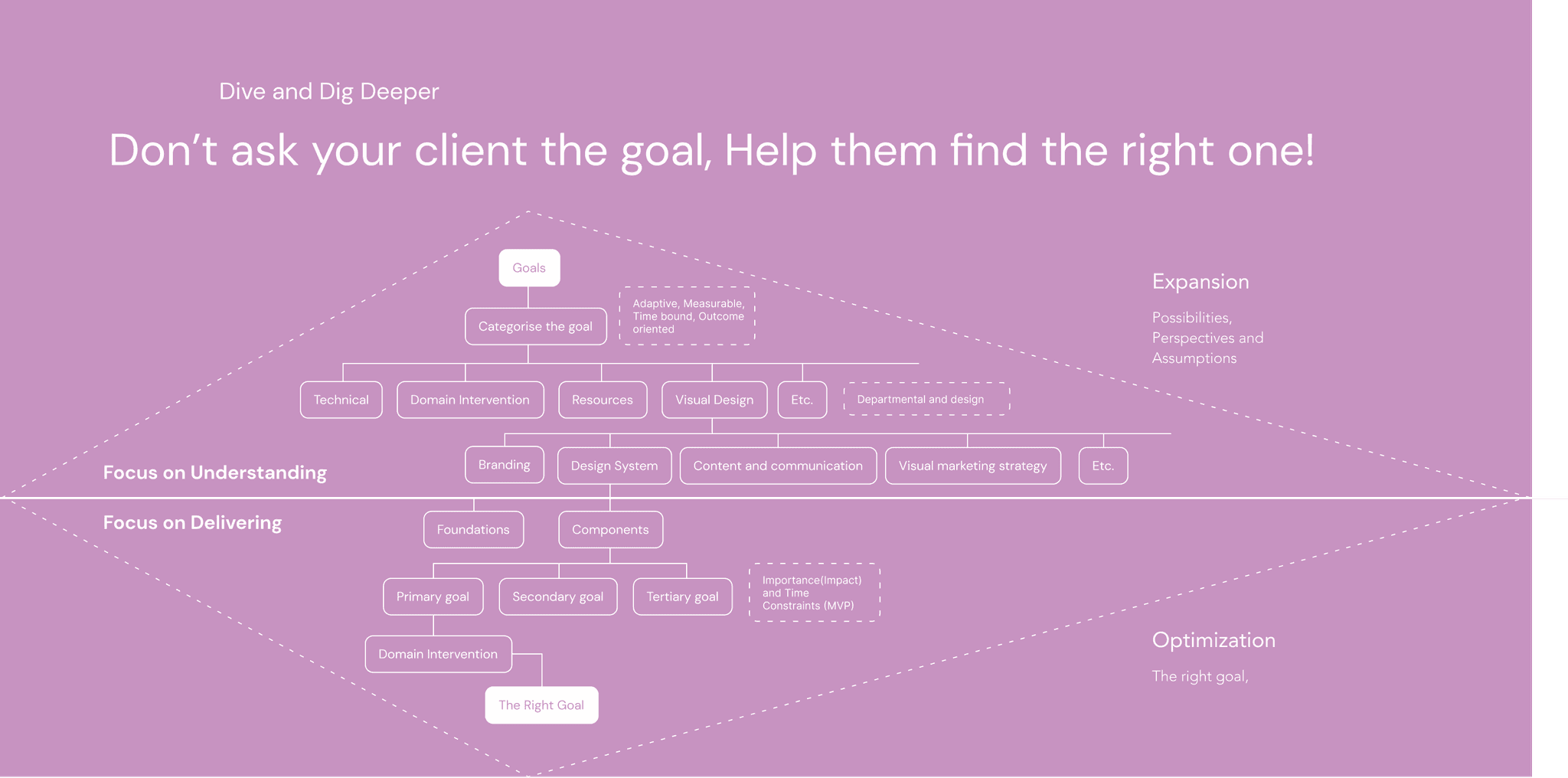
System design is the phase that bridges the gap between problem domain and the existing system in a manageable way. This phase focuses on the solution domain, i.e. “how to implement?”. the complex activity of system development is divided into several smaller sub-activities, which coordinate with each other to achieve the main objective of system development.We create models to understand systems. Thus, realism and completeness are at best a distraction when creating a model for a domain, and at worst, a recipe for disaster. Distilling out the key elements of a domain in order to build an effective model is the central practice in , often facilitated by techniques like Event Storming or Domain Storytelling.
System design is the phase that bridges the gap between problem domain and the existing system in a manageable way. This phase focuses on the solution domain, i.e. “how to implement?”. the complex activity of system development is divided into several smaller sub-activities, which coordinate with each other to achieve the main objective of system development.We create models to understand systems. Thus, realism and completeness are at best a distraction when creating a model for a domain, and at worst, a recipe for disaster. Distilling out the key elements of a domain in order to build an effective model is the central practice in , often facilitated by techniques like Event Storming or Domain Storytelling.
George Box
George Box
George Box
All Models are wrong, but some are useful
All Models are wrong, but some are useful
All Models are wrong, but some are useful
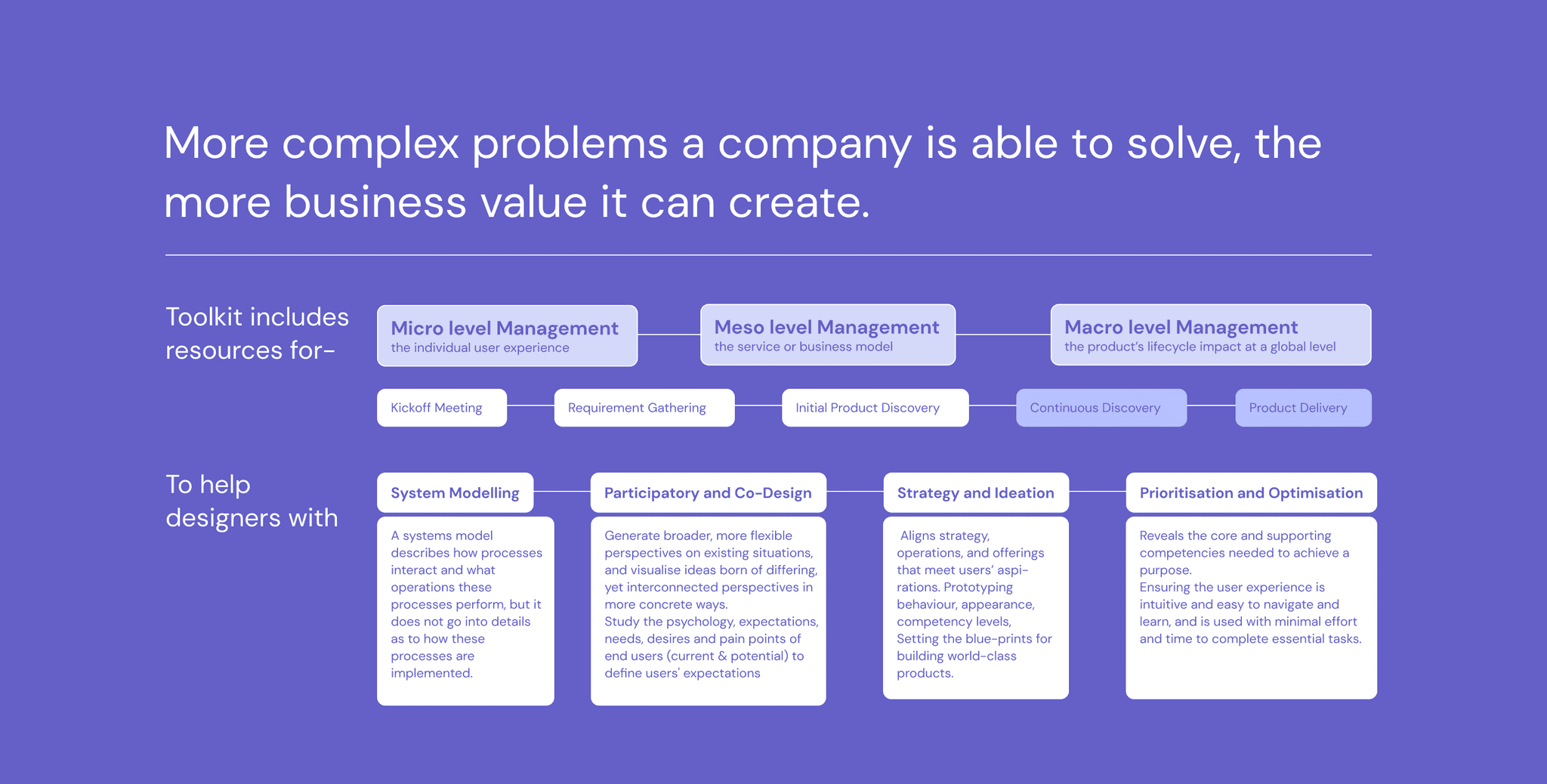
KOCH expands its scope from products and people to money, brands, technology, and market access that can support stakeholder participation. It lays out areas for value creation a company might decide to explore in response to insights into user terrains. It helps clarify the extent of change and risk a proposition represents. It aligns strategy, operations, and offerings that meet users’ aspirations. It reveals the core and supporting competencies needed to achieve a purpose. It helps teams generate broader, more flexible perspectives on existing situations, explore alternate futures, and visualise ideas born of differing, yet interconnected perspectives in more concrete ways. It’s focused on identifying and creating fit within an organisation.
KOCH expands its scope from products and people to money, brands, technology, and market access that can support stakeholder participation. It lays out areas for value creation a company might decide to explore in response to insights into user terrains. It helps clarify the extent of change and risk a proposition represents. It aligns strategy, operations, and offerings that meet users’ aspirations. It reveals the core and supporting competencies needed to achieve a purpose. It helps teams generate broader, more flexible perspectives on existing situations, explore alternate futures, and visualise ideas born of differing, yet interconnected perspectives in more concrete ways. It’s focused on identifying and creating fit within an organisation.
Understand>Optimise>Strategise
Understand>Optimise>Strategise
Understand>Optimise>Strategise
Understand Why>What
Understand Why>What
Understand Why>What
“If you understand the WHY behind things, the WHAT and the HOW always fall into place.” — JG
Why? Do we understand the why? Why is it important to you? Why is it important to others? How does it make our world better? In what way? Is there a purpose that connects to a passion or deep need within us that will hold us to that commitment? Do we understand why it is important to others? How does it fit with the bigger picture?
Overcoming information pollution will require us to make significant changes to current systems — can we protect privacy while providing open access to data? Can we avoid censorship and still certify legitimate content?
A key question today is, “How do I find information that is true?” How much information on the web is lies, exaggeration, mistaken, and out of date? Probably a large portion.
“If you understand the WHY behind things, the WHAT and the HOW always fall into place.” — JG
Why? Do we understand the why? Why is it important to you? Why is it important to others? How does it make our world better? In what way? Is there a purpose that connects to a passion or deep need within us that will hold us to that commitment? Do we understand why it is important to others? How does it fit with the bigger picture?
Overcoming information pollution will require us to make significant changes to current systems — can we protect privacy while providing open access to data? Can we avoid censorship and still certify legitimate content?
A key question today is, “How do I find information that is true?” How much information on the web is lies, exaggeration, mistaken, and out of date? Probably a large portion.
Why KOCH
Why KOCH
Why KOCH
A Possible Impact
A Possible Impact
A Possible Impact
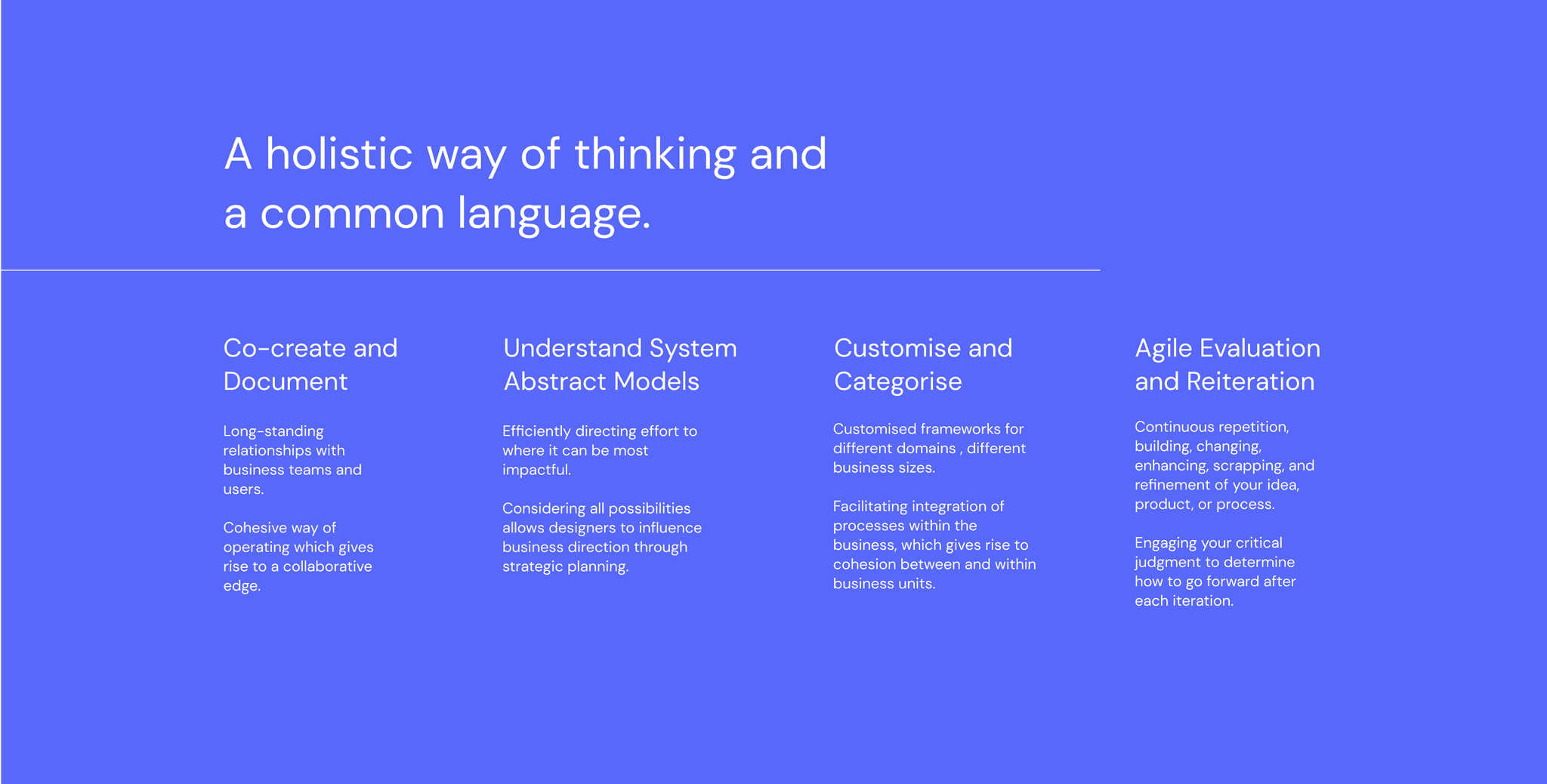
Contemporary institutions, organisations, and ways of working need to be reframed to fit the new, more flexible, networked world we have entered. As it has done in the past, design can contribute a great deal to reframing these and other challenges. Tangible and Intangible Value Design outcomes benefit more than an organisations bottom line — it creates new ways of creating and exchanging many outcomes including knowledge, data, access to an ecosystem or market, natural resources, and expertise in a new industry. Design is the field concerned with making pragmatic changes in the physical and symbolic world that create tangible and intangible value for people, organisations, and the natural environment. It does this by applying frameworks and methods that lead to novel solutions that can be used in many ways
Contemporary institutions, organisations, and ways of working need to be reframed to fit the new, more flexible, networked world we have entered. As it has done in the past, design can contribute a great deal to reframing these and other challenges. Tangible and Intangible Value Design outcomes benefit more than an organisations bottom line — it creates new ways of creating and exchanging many outcomes including knowledge, data, access to an ecosystem or market, natural resources, and expertise in a new industry. Design is the field concerned with making pragmatic changes in the physical and symbolic world that create tangible and intangible value for people, organisations, and the natural environment. It does this by applying frameworks and methods that lead to novel solutions that can be used in many ways
Anticipating
Anticipating
Anticipating
The Future.
The Future.
The Future.
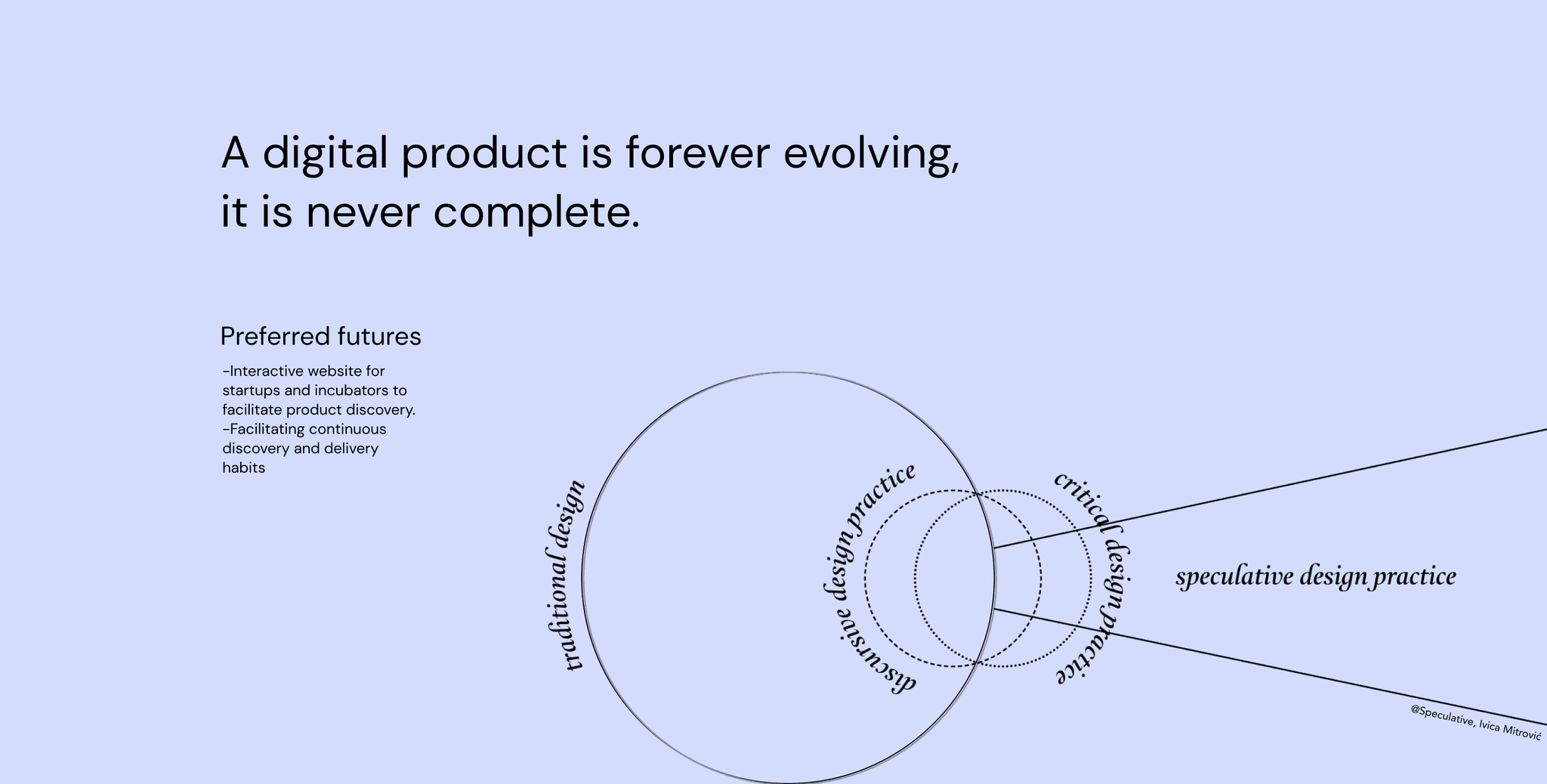
A digital product is forever evolving, it is never complete.
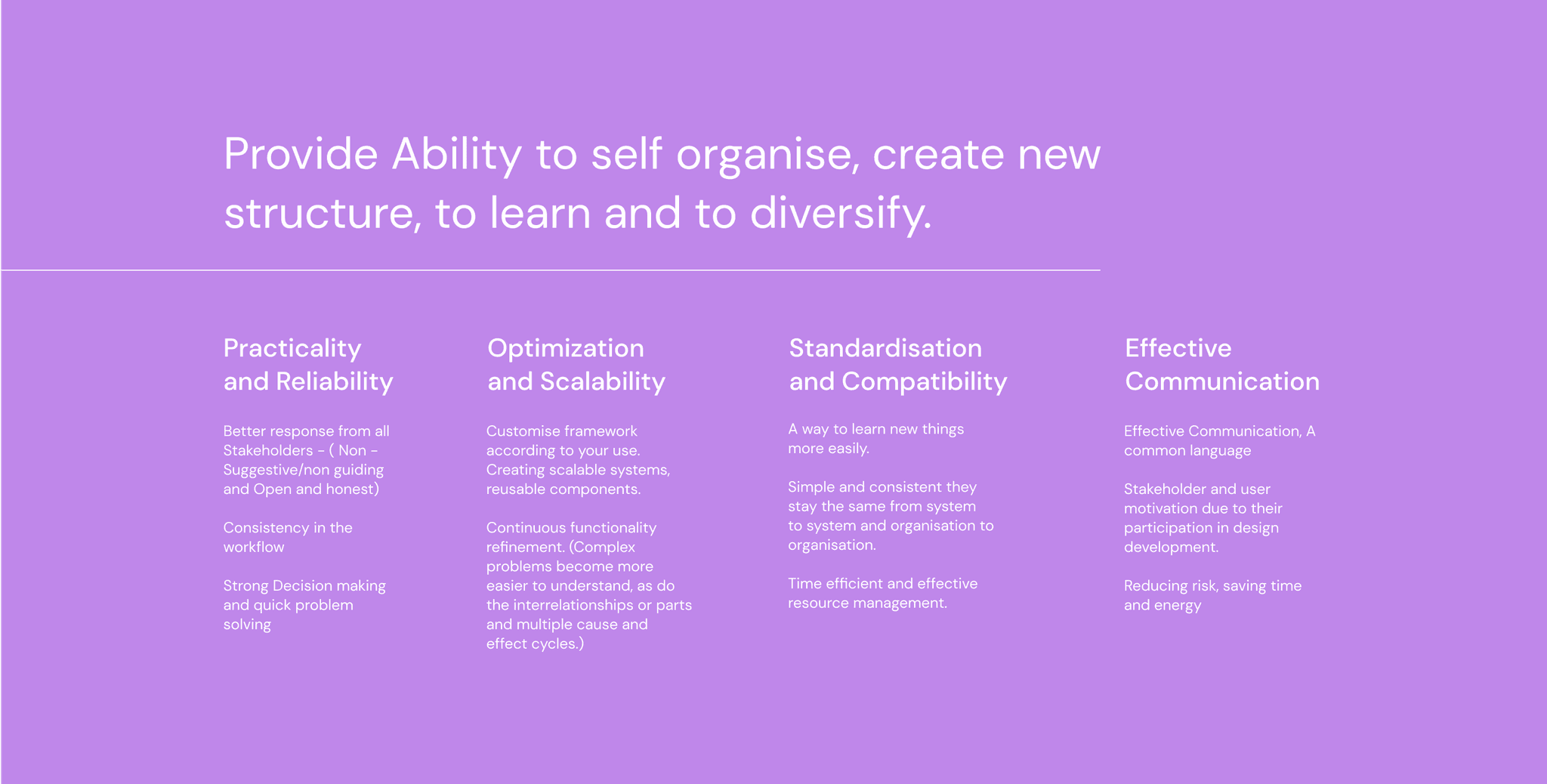
Through clearly understanding how to cohesively operate internally by reducing risk and saving time and energy, systems thinking allows businesses to fill niches in the socio-ecological ecosystem. This allows for the fuller expression of products and services that can be offered into the local community and global online ecosystem, as well as more astutely showcasing what businesses can offer. Finding that harmonious fit with the needs of the local community and global online ecosystem being met, when matched with what business are best positioned to offer, is the essence of an integrated approach.
I conclude by introducing a new agenda for design cantered on the well-being of people, organisations, and the natural environment, with health, happiness, and prosperity as the levers driving change.
A digital product is forever evolving, it is never complete.
Through clearly understanding how to cohesively operate internally by reducing risk and saving time and energy, systems thinking allows businesses to fill niches in the socio-ecological ecosystem. This allows for the fuller expression of products and services that can be offered into the local community and global online ecosystem, as well as more astutely showcasing what businesses can offer. Finding that harmonious fit with the needs of the local community and global online ecosystem being met, when matched with what business are best positioned to offer, is the essence of an integrated approach.
I conclude by introducing a new agenda for design cantered on the well-being of people, organisations, and the natural environment, with health, happiness, and prosperity as the levers driving change.
What is
KOCH
Out of simple rules of self-organisation can grow enormous, diversifying crystals of technology, physical structures, organisations and cultures.
Imagine an equilateral triangle. Add to the middle of each side another equilateral triangle, one third the size of the first one. Add to each of the new sides another triangle, one third smaller and so on. The result is a KOCH snowflake. KOCH snowflake evolves from a simple srt of fractal rules, organising principles or decision rules. The differentiation of a single cell into a human being proceeds by some similar set of geometric rules. Simple rules that have the capability to generate utter complex systems such as you and me. (Inspired by Thinking in systems - Donella Meadows)

The Project is still under progress. I have been working with the my fellow designers and mentors (Some of the most talented people) who have been extremely supportive through the entire process. Expected to launch the product by the end of the year.